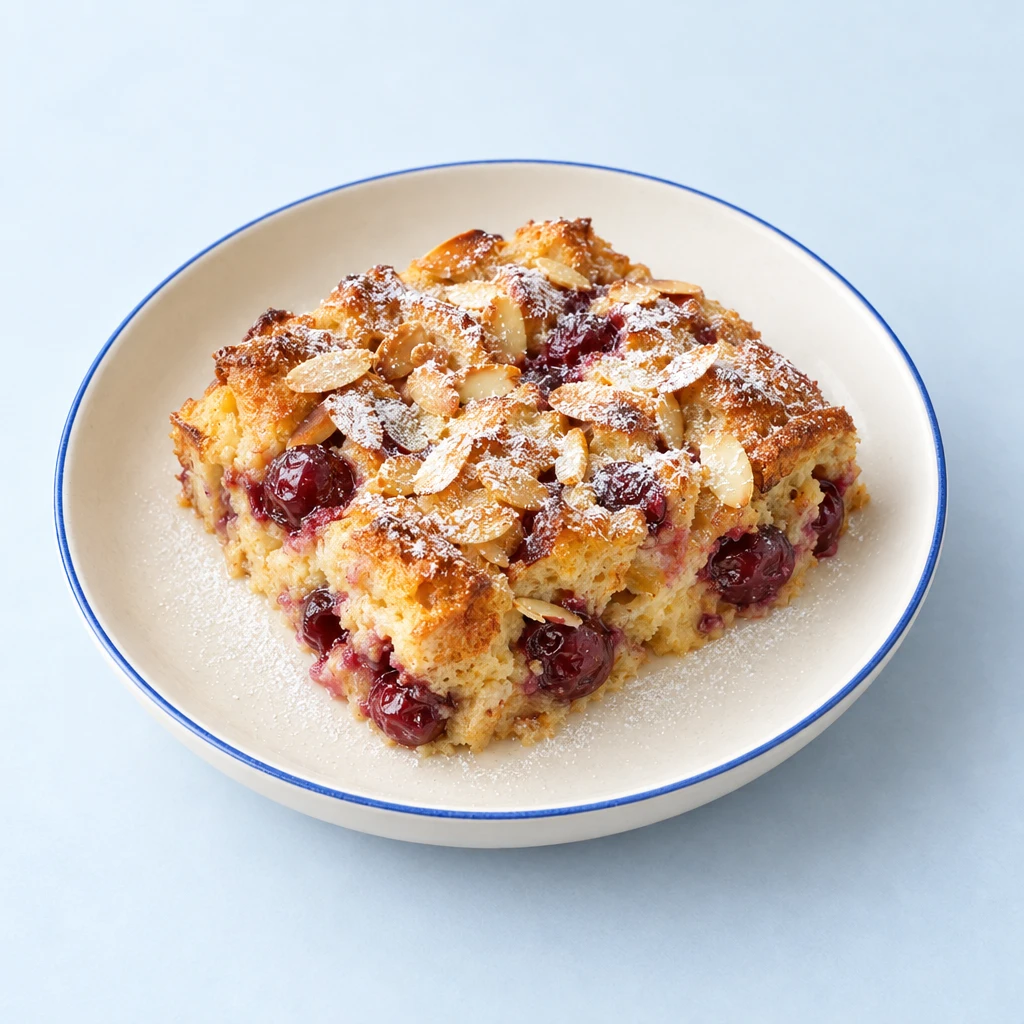
Kirschmichel – German Cherry Bread Pudding
DNutri-Score
- Calories
- 191.3 kcal
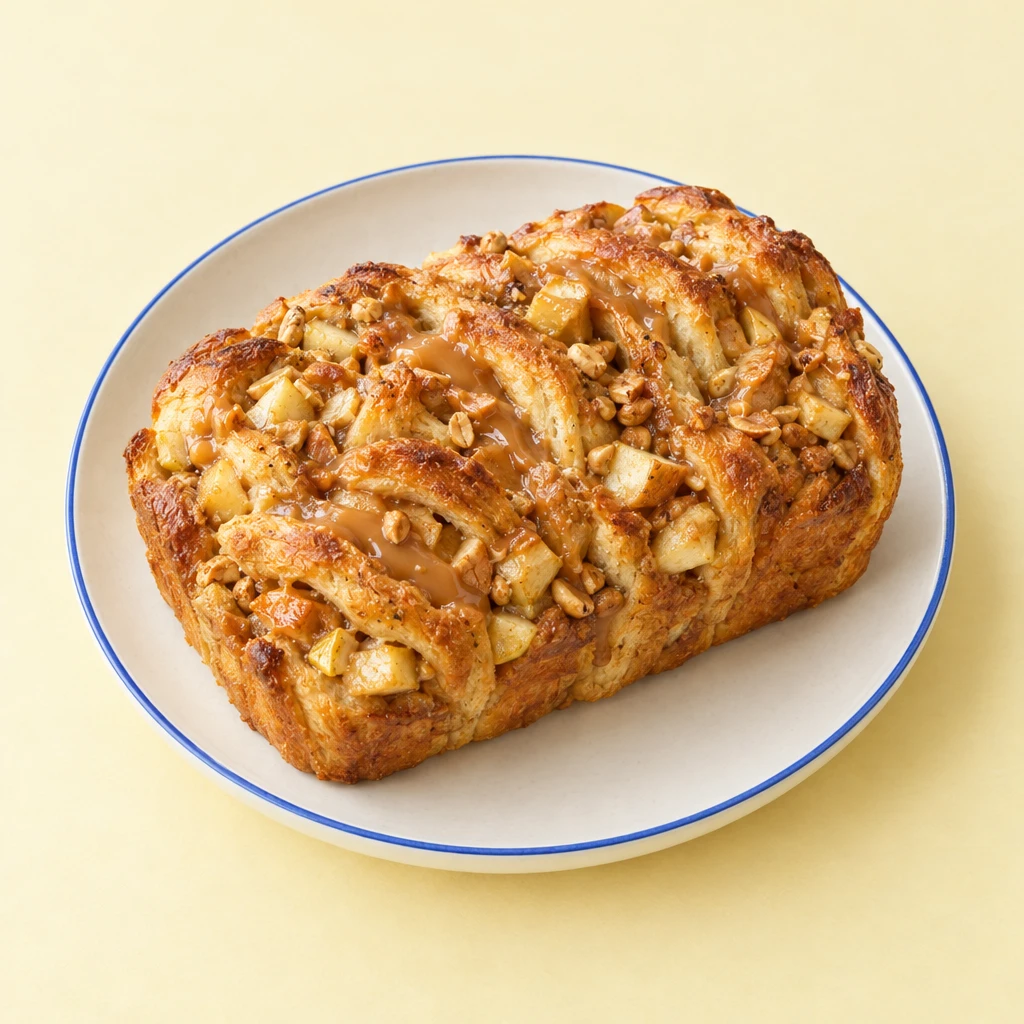
Sweet yeast pull-apart bread with apple pieces, roasted peanuts and caramel cream with fleur de sel.
STEP BY STEP
Chop the caramel sweets. Bring the cream to the boil, add the sweets and stir until melted. Pour the caramel cream into a bowl, stir in the fleur de sel and leave to cool.
For the dough, warm the milk until lukewarm. Crumble the yeast into a mixing bowl and stir in the milk and sugar. Rinse the lime under hot water, grate the zest and squeeze out the juice. Add the flour, ¼ tsp salt, the egg, egg yolk, lime zest and butter. Knead with the dough hooks of a hand mixer for approx. 4 minutes until smooth. Dust the dough with a little flour, cover and leave to rise in a warm place for approx. 1 hour.
Roughly chop the peanuts. Stir the caramel cream until smooth. Peel, quarter and core the apples, then cut into small cubes and mix with the lime juice. Grease a loaf tin (30 cm long) with butter.
Roll out the dough on a lightly floured work surface into a rectangle (approx. 40 x 40 cm). Cut into squares (10 x 10 cm). Spread 2/3 of the caramel cream over the squares. Scatter over the apples and peanuts and press them into the dough. Tilt the loaf tin slightly and stand the dough pieces upright in the tin, one behind the other. Arrange the final pieces with their untopped dough sides facing the wall of the tin. Cover and leave the dough to rise for a further 15 minutes.
Meanwhile, preheat the oven to 180 °C (160 °C fan). Bake the pull-apart bread on the lowest shelf for approx. 50 minutes. If necessary, cover loosely with baking paper after approx. 25 minutes. Leave the bread to cool in the tin for approx. 15 minutes, then remove it from the tin. Best served lukewarm with the remaining caramel cream.
Publisher: meala GmbH
Nutrition based on BLS & additional sources. per serving
Nutrition is calculated from ingredient quantities and linked food composition data, per serving. Sources include the German Nutrient Database (BLS) and additional sources. Estimated quantities, product differences and preparation can affect actual values. Cooking losses and water absorption are not modelled separately. Missing values are left unspecified. Values are calculated estimates, not laboratory measurements.
Sources: BLS, additional food databases.
LOOKING FOR MORE INSPIRATION?