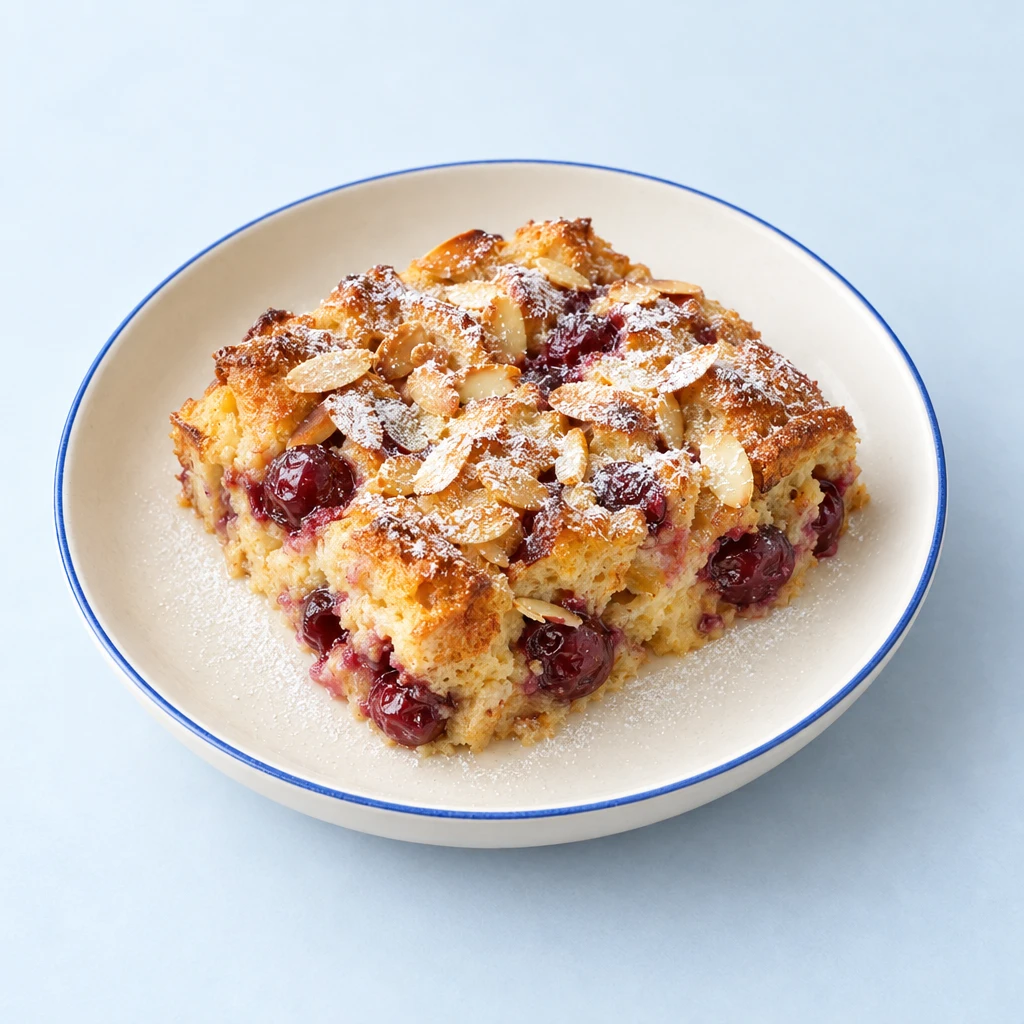
Kirschmichel – German Cherry Bread Pudding
DNutri-Score
- Calories
- 191.3 kcal
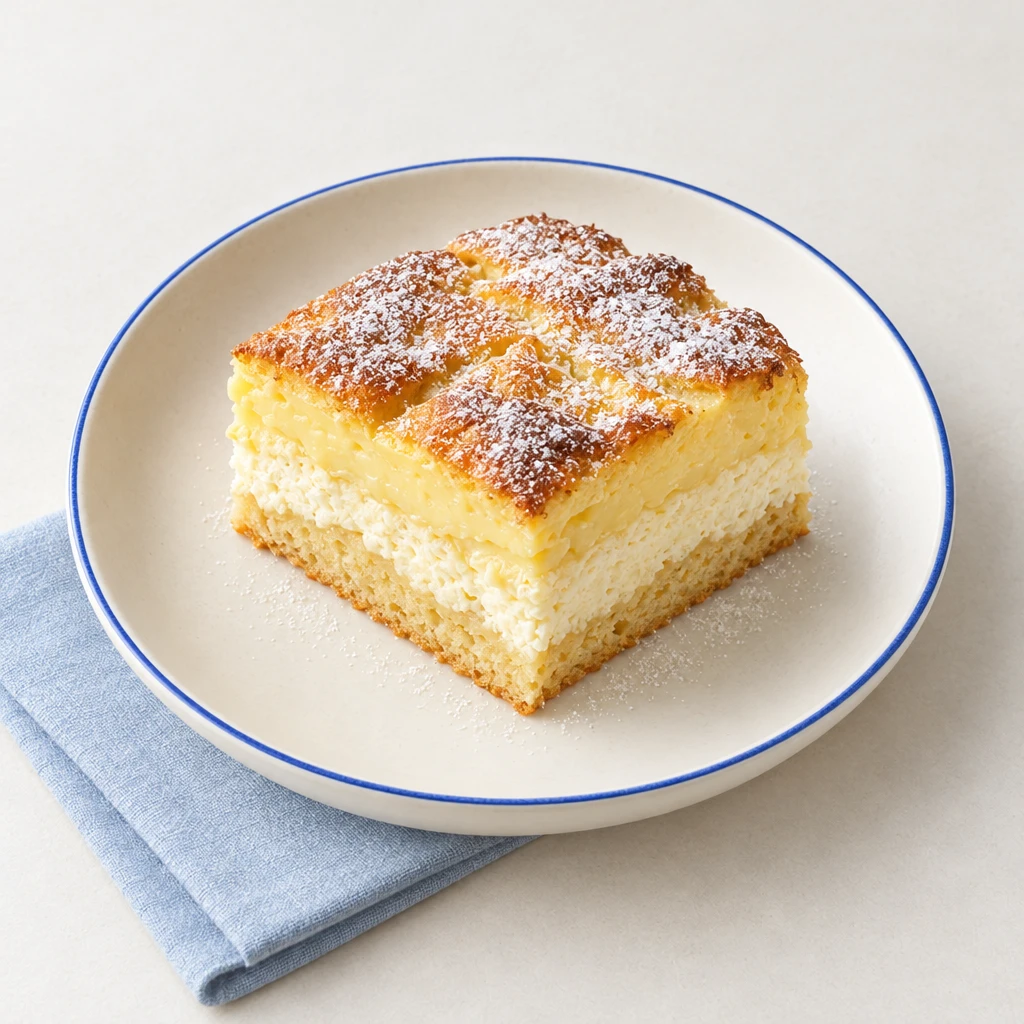
This traditional Saxon cake has three layers: a yeast dough base, a creamy quark filling and an airy custard topping.
STEP BY STEP
For the yeast dough, sift the flour into a bowl and make a well in the centre. Crumble the yeast into the well. Gently warm the milk and sugar in a saucepan, stirring, then pour over the yeast. Gradually work in some flour from the edges. Knead everything into a soft dough and leave to rest for 30 minutes.
Meanwhile, prepare the quark layer. Rinse the lemon under hot water, pat dry and finely grate the zest. Using an electric hand mixer with whisk attachments, beat the quark, vanilla sugar, egg, softened butter and lemon zest until creamy, then refrigerate.
For the yeast dough, beat the egg with a pinch of salt until creamy. Melt the butter in a saucepan and fold it into the egg mixture. Knead the egg and butter mixture thoroughly into the dough and leave to rise for another 30 minutes.
For the custard layer, prepare the vanilla custard according to the packet instructions, using the milk and 40 g sugar. Separate the eggs. Beat the egg yolks with the remaining sugar until creamy. Using an electric hand mixer with whisk attachments, whisk the egg whites until stiff. Melt the butter in a saucepan. Stir the creamy egg yolk mixture and butter into the vanilla custard, then fold this mixture into the whisked egg whites.
Preheat the oven to 170 °C conventional (150 °C fan).
Grease a springform tin. Roll out the yeast dough to an even thickness and line the tin with it. Gently press the dough against the sides and prick the base several times with a fork. Spread the quark mixture over the dough and smooth the surface. Spread the custard layer on top and smooth it too.
Bake the Eierschecke on the second shelf from the bottom for 55–60 minutes.
Remove the cake from the oven and leave to cool completely. Release it from the tin, dust with icing sugar if desired and serve.
Publisher: meala GmbH
Nutrition based on BLS & additional sources. per serving
Nutrition is calculated from ingredient quantities and linked food composition data, per serving. Sources include the German Nutrient Database (BLS) and additional sources. Estimated quantities, product differences and preparation can affect actual values. Cooking losses and water absorption are not modelled separately. Missing values are left unspecified. Values are calculated estimates, not laboratory measurements.
Sources: BLS, additional food databases.
LOOKING FOR MORE INSPIRATION?