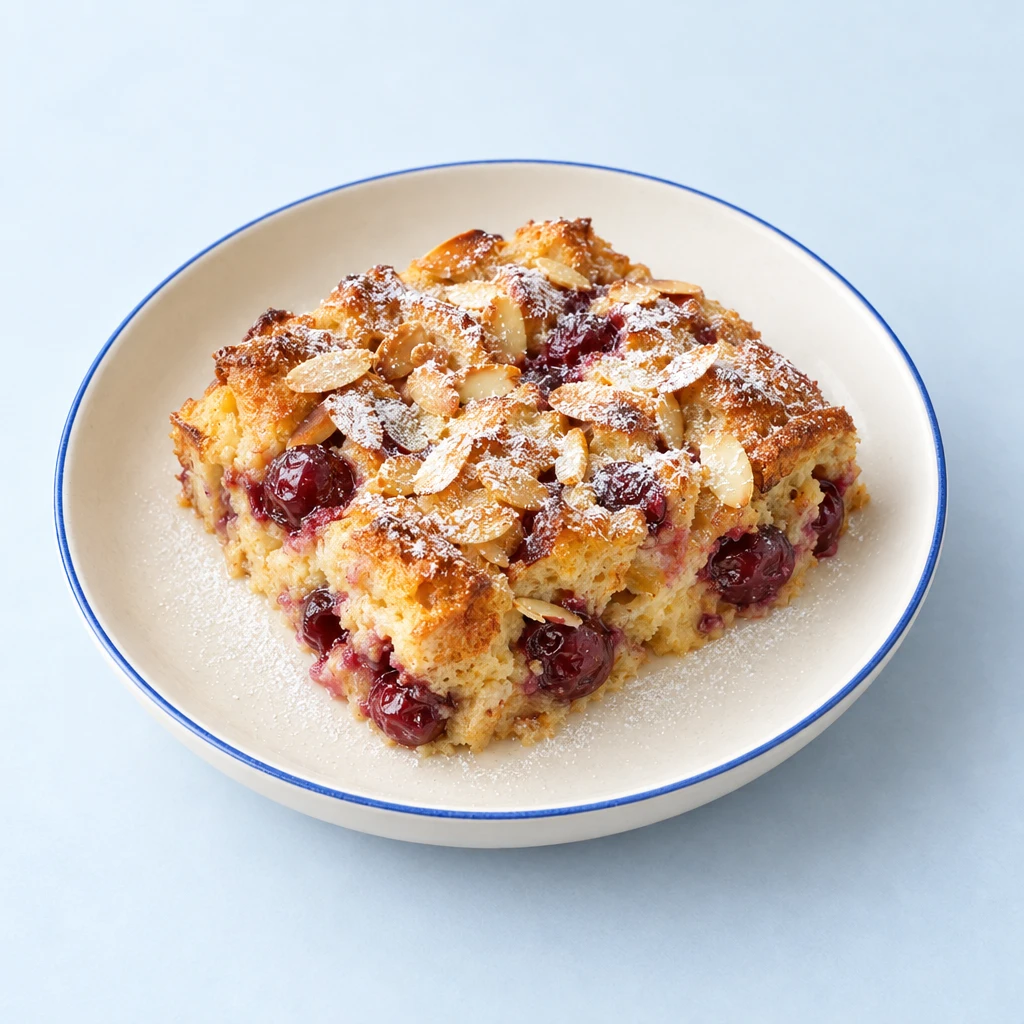
Kirschmichel – German Cherry Bread Pudding
DNutri-Score
- Calories
- 191.3 kcal
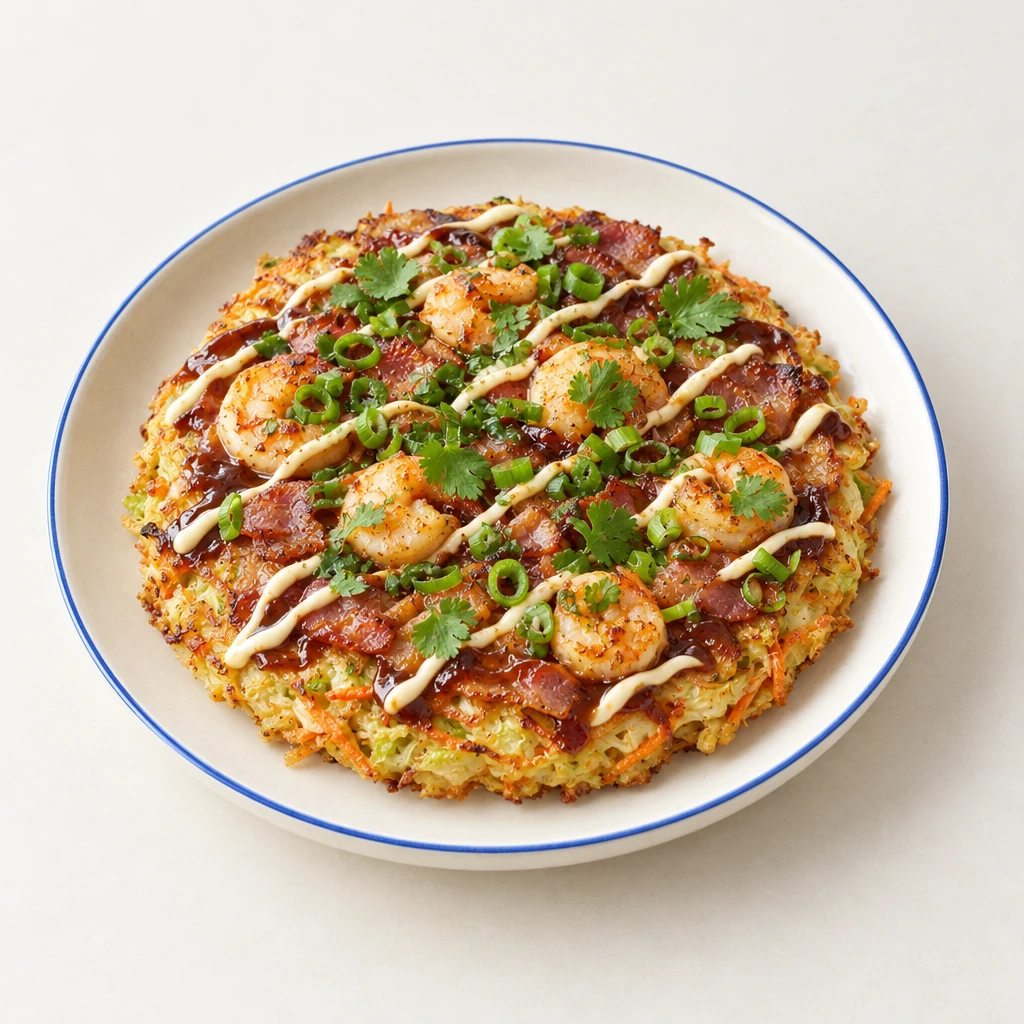
These Japanese pancakes with pointed cabbage and carrot are topped with crispy bacon, king prawns and spring onions. A savoury sauce, mayonnaise and fresh coriander complete the okonomiyaki.
STEP BY STEP
For the Japanese pancakes, sift the flour and baking powder into a bowl. Whisk the eggs and salt with 350 ml water, add to the flour mixture and whisk until smooth.
Remove the outer leaves and tough core from the pointed cabbage. Halve the cabbage, cut into pieces and finely shred. Peel the carrot and cut into small matchsticks. Wash the spring onions, remove the roots and cut into thin rings.
Add the cabbage and carrot to the batter and mix evenly. Season with salt, pepper and nutmeg.
Wash the lime, halve it and squeeze out the juice. Peel the garlic and crush it using a garlic press. Peel and finely grate the ginger. Mix the lime juice, garlic and ginger, then season with a pinch of sugar.
Fry the bacon strips in a non-stick frying pan without adding oil until crisp. Remove and set aside on kitchen paper. Add the sesame oil to the pan, heat it and fry the king prawns for 2 minutes. Add the lime, ginger and garlic mixture and turn the prawns in it for a further 2 minutes.
Heat the rapeseed oil in a large frying pan at least 20 cm in diameter. Spread the batter over the base of the pan and cook over a medium heat for 3–4 minutes. Turn over and top with the bacon, king prawns and spring onions. Cook for a further 3–4 minutes.
Mix the soy sauce, oyster sauce, Worcestershire sauce, ketchup and honey, then drizzle over the cooked pancake in a zigzag pattern. Pick the coriander leaves, wash and dry them. If needed, transfer the mayonnaise to a piping bag fitted with a small round nozzle.
Garnish the okonomiyaki with mayonnaise and fresh coriander, then serve.
Publisher: meala GmbH
Nutrition based on BLS & additional sources. per serving
Nutrition is calculated from ingredient quantities and linked food composition data, per serving. Sources include the German Nutrient Database (BLS) and additional sources. Estimated quantities, product differences and preparation can affect actual values. Cooking losses and water absorption are not modelled separately. Missing values are left unspecified. Values are calculated estimates, not laboratory measurements.
Sources: BLS, additional food databases.
LOOKING FOR MORE INSPIRATION?