
Kirschmichel – German Cherry Bread Pudding
DNutri-Score
- Calories
- 191.3 kcal
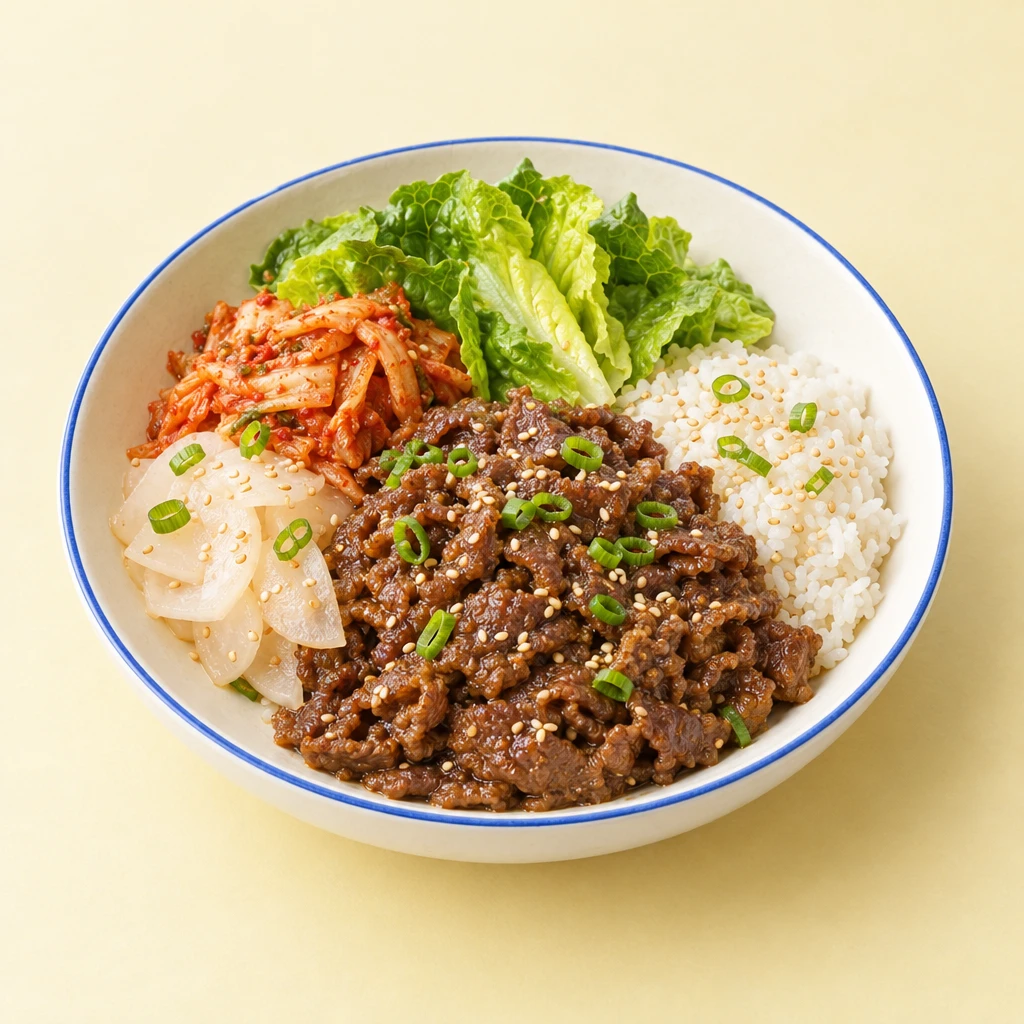
Bulgogi literally means “fire meat”. The name refers not to the dish’s spiciness, but to the traditional method of cooking it over an open fire.
STEP BY STEP
If needed, place the beef in the freezer for 60 minutes.
For the marinade, peel the garlic and place in a tall measuring jug. Wash and trim the spring onions, then finely slice into rings. Reserve the green rings and refrigerate if needed.
Add half the white spring onion rings, the soy sauce, coconut blossom sugar and sesame oil to the measuring jug and blend until smooth. Add the other half of the white spring onion rings and mix well.
Cut the beef into wafer-thin slices and place in the prepared marinade in a sealable container. Marinate for 2–3 hours.
Wash the lettuce and spin dry. Cook the rice in well-salted water according to the packet instructions.
Toast the sesame seeds in a dry non-stick frying pan. Drain the radish and cut into thin slices. Drain the kimchi if needed.
Put the beef and marinade in a wok or griddle pan, sear over a high heat for about 1–2 minutes, then remove.
Take a lettuce leaf in your hand, spread with ssamjang and add some bulgogi, kimchi and radish. Sprinkle with sesame seeds and green spring onion rings, and serve with rice.
Publisher: meala GmbH
Nutrition based on BLS & additional sources. per serving
Nutrition is calculated from ingredient quantities and linked food composition data, per serving. Sources include the German Nutrient Database (BLS) and additional sources. Estimated quantities, product differences and preparation can affect actual values. Cooking losses and water absorption are not modelled separately. Missing values are left unspecified. Values are calculated estimates, not laboratory measurements.
Sources: BLS, additional food databases.
LOOKING FOR MORE INSPIRATION?